27.04.2026
© www.brueckenweb.de / Frank Sellke

30.05.2026

30.05.2026
A map is loading

27.04.2026
© www.brueckenweb.de / Frank Sellke

30.05.2026

30.05.2026
A map is loading
Here are the essential facts about its short but historic history:
Background: After crossing the Rhine in the spring of 1945, the Allies urgently needed reliable supply routes to bring troops and equipment to the front. [1, 2, 3]
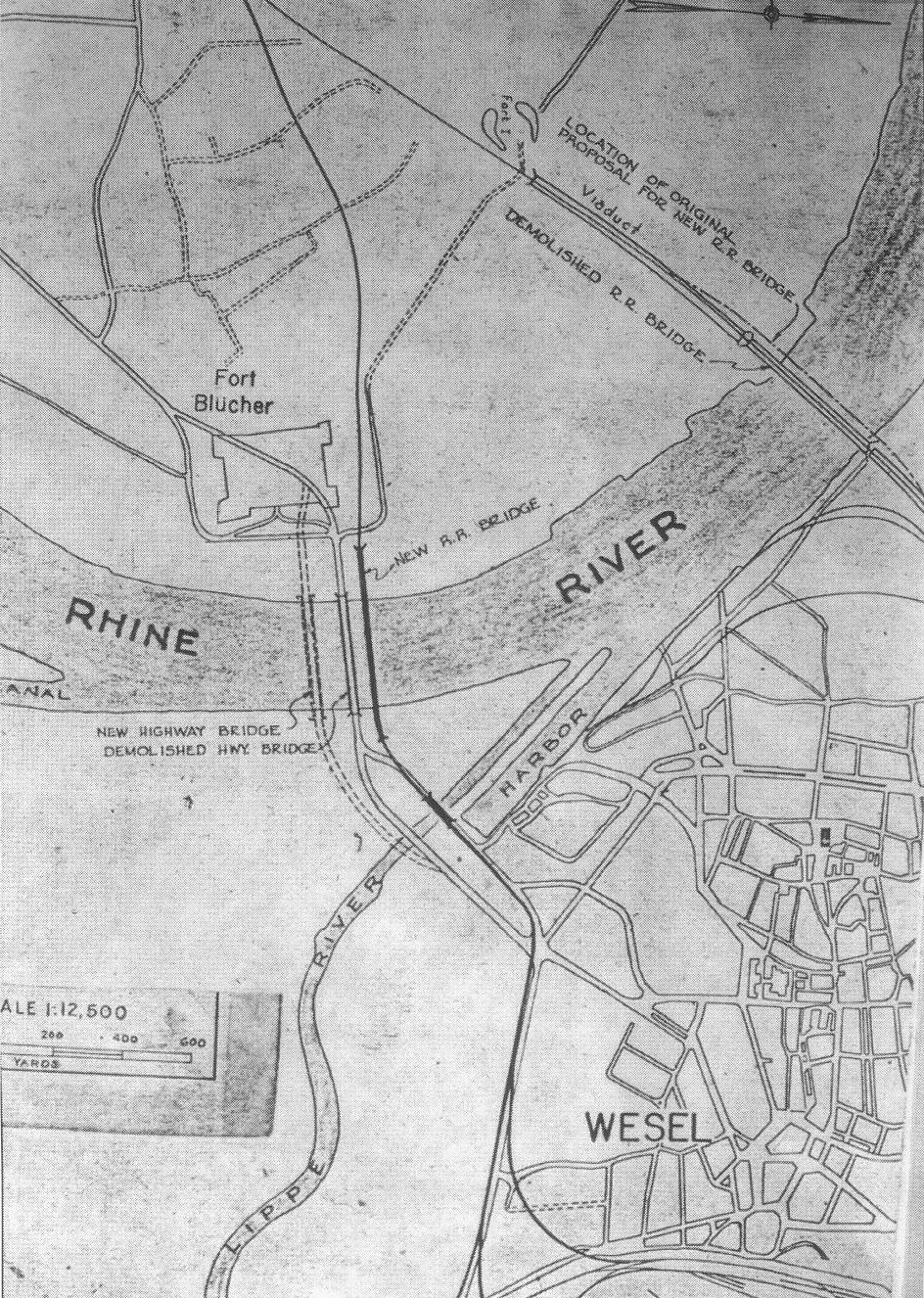
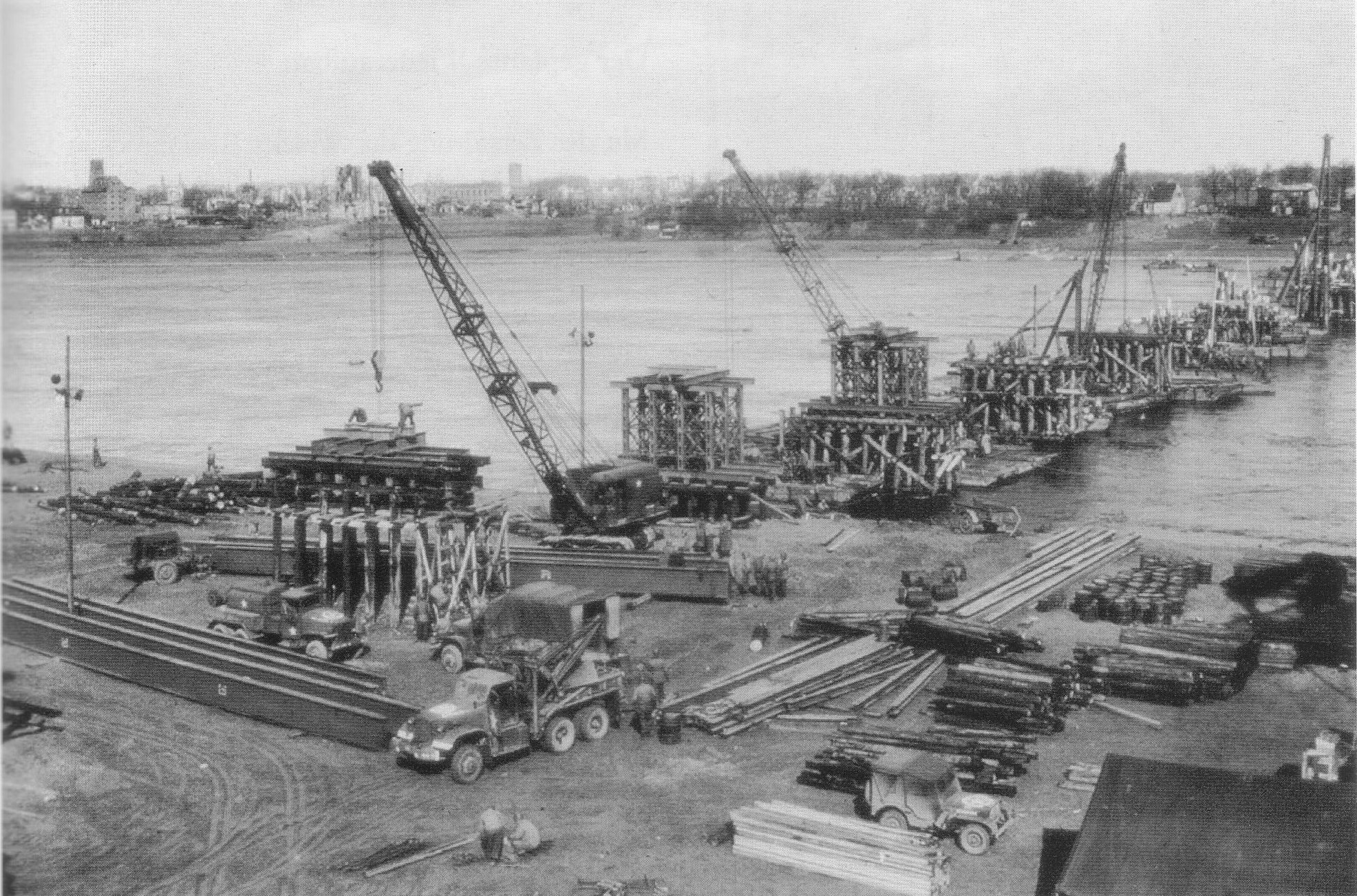
Construction and completion: The structure was Built in April 1945 under extreme conditions in just 10 days by the US Army Corps of Engineers (including the 355th Engineer General Service Regiment) and opened to traffic on April 9, 1945. [1, 2, 3, 4, 5]
Named after: The bridge was named after Major Robert A. Gouldin. He and two other soldiers died in boating accidents during the dangerous construction work. [1, 2, 3]
Historical Significance: She was one of the first to leave Bridges built by the Allies across the Rhine are etched into the history books. [1, 2]
Note on the naming: A historical photo archive of the United States Army is usually named after the bridge near Wesel, as Major Gouldin's engineer units documented numerous bridge-building projects in Germany. Comprehensive official reports on this can be found in the historical archives of the U.S. Army Center of Military History.
The Major Robert A. Gouldin Bridge was dismantled in November 1946 after only about 19 months of operation.
The reasons for its dismantling:
The reason: The temporary bridge had been erected by US engineers in record time as a purely military structure made of wooden piles and standardized steel elements (Miter girders). It was not designed for long-term civilian use. [1, 2, 3]
The Succession: To ensure continuous traffic across the Rhine, British pioneer units began constructing the bridge entirely in October 1945. Nearby, a more stable, semi-permanent connection was built – the so-called Montgomery Bridge. [1]
The timeline: During the construction of the new Montgomery Bridge, the Gouldin Bridge still served in part as a pile-driving and work platform for the heavy construction machinery. After the Montgomery Bridge was opened to traffic in early 1946, the Gouldin Bridge completely lost its function and was entirely dismantled in the same year.