05.06.2026
© © Carole Raddato
 Creative Commons
Keine weiteren Bilder verfügbar
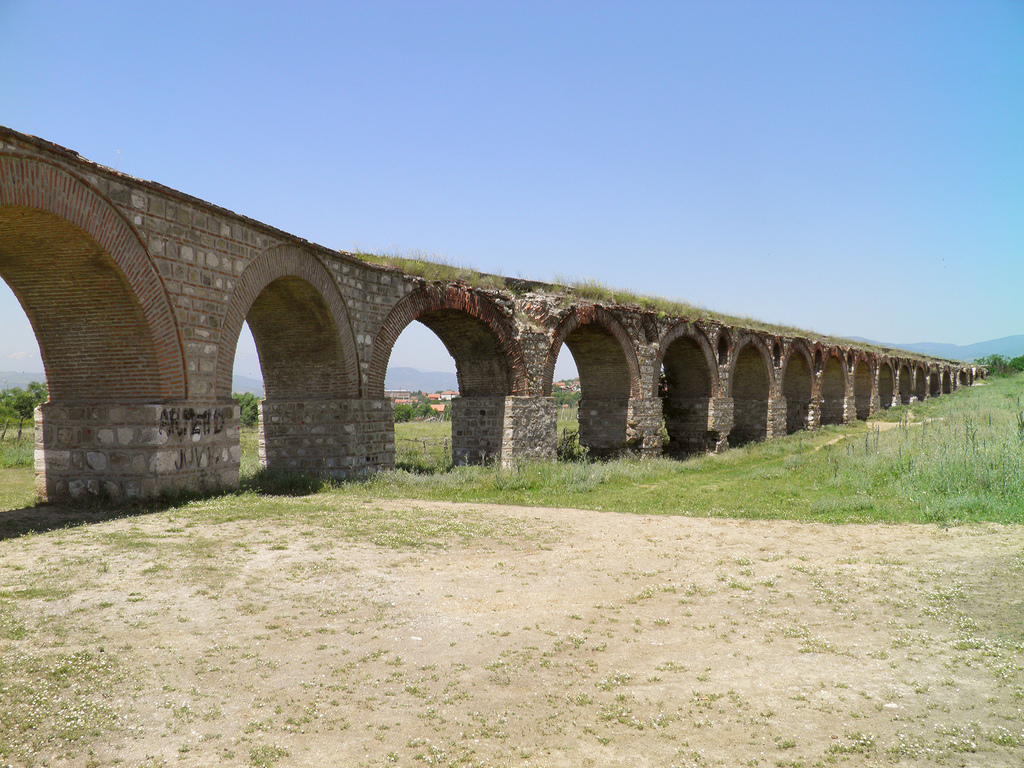
The aqueduct consists of 55 arches
Various theories surround its historical significance and time of origin:
Byzantine era (6th century): The most popular assumption is that the aqueduct was built during the reign of Emperor Justinian I (527–554) to supply the city of Justiniana Prima or the Roman settlement of Scupi with fresh water. [1, 2]
Ottoman Era (15th/16th Century): Due to architectural similarities with other Ottoman buildings, many historians believe that the structure was only built by the Ottomans in the late 15th or 16th century to supply water to the hamams and the city. [1, 2]
Roman Era (1st Century): Another, older theory dates its origin to the Roman Imperial period, as aqueducts were a typical feature of Roman expansion.
A map is loading