 Use in accordance with the terms and conditions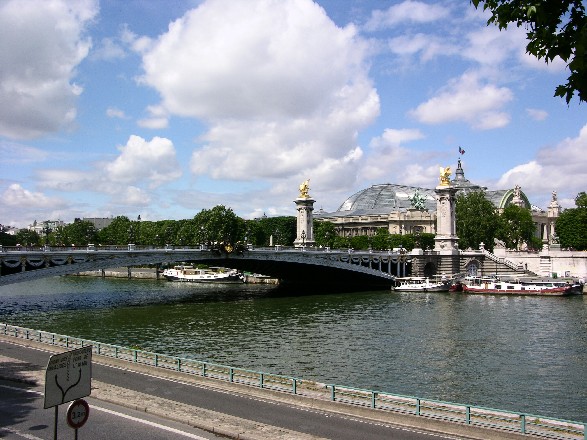
18.05.2007
© Frank Sellke / brueckenweb.de
Use in accordance with the terms and conditions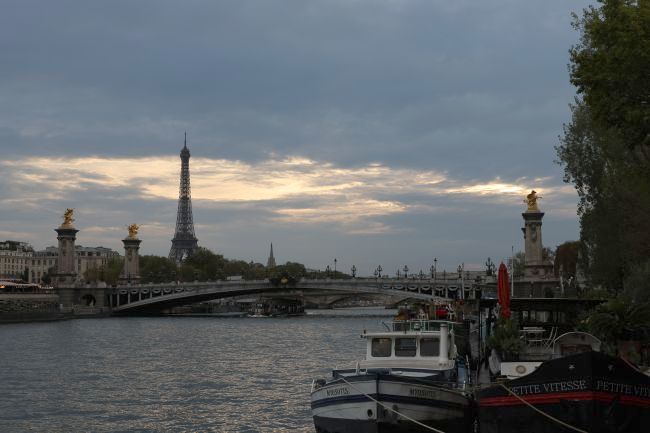
16.09.2023
© www.brueckenweb.de / Frank Sellke
Use in accordance with the terms and conditionsThe Pont Alexandre III: The Sparkling Jewel of the Parisian Belle Époque
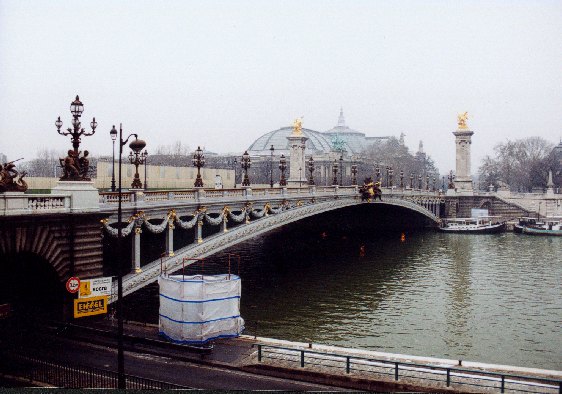
The Pont Alexandre III is undoubtedly the most magnificent and elegant bridge in Paris. This monumental structure connects the Champs-Élysées district with the Invalides and represents a masterpiece of engineering and craftsmanship from the Belle Époque. The bridge was built as part of the preparations for the 1900 World's Fair, where Paris aimed to showcase its technological and artistic supremacy to the world.
Behind its architectural splendor lies a profound political symbolism. The bridge was built to celebrate the Franco-Russian Alliance, signed in 1894. Named after the Russian Tsar Alexander III, it was ultimately his son, Tsar Nicholas II, who laid the foundation stone in a solemn ceremony in October 1896. The bridge's rich ornamentation reflects this connection; for example, the elaborate nymph reliefs in the center of the arches symbolize the Seine and Neva rivers, while other embellishments symbolize medieval and modern France, the Renaissance, and the reign of Louis XIV. From a technical standpoint, the construction was an absolute masterpiece by the engineers Jean Resal and Amédée Alby. To avoid obstructing the view between the Champs-Élysées and the Invalides complex, the bridge was permitted to span the river with only a single, extremely shallow cast steel arch. Despite a width of 45 meters and a length of 107 meters, the structure therefore requires no supporting piers in the water, making it one of the most daring bridges of the era (arch engraving at 1:17). The bridge's visual hallmark is its exceptionally opulent decoration. Four monumental, 17-meter-high pylons flank the approaches and support gilded bronze statues of the winged horse Pegasus, representing the glory of art, science, commerce, and industry. At night, the bridge, a listed historical monument since 1975, is illuminated by 32 richly decorated, cast-iron candelabras, making it one of the most romantic photo opportunities in the French capital.