27.09.2025
 Use in accordance with the terms and conditions
27.09.2025
© www.brueckenweb.de / Frank Sellke
Use in accordance with the terms and conditions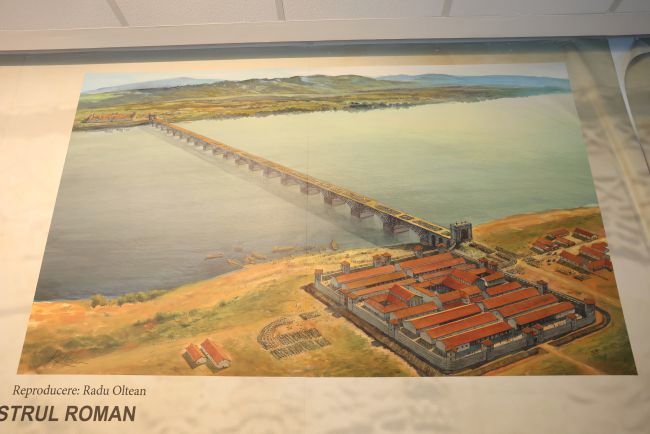
27.09.2025
© www.brueckenweb.de / Frank Sellke
Use in accordance with the terms and conditionsThe Trajan's Bridge or Traian's Bridge, also called the Roman Bridge near Drobeta-Turnu Severin or the Apollodorus Bridge over the Danube, was built in 105 AD. completed under the Roman Emperor Trajan and was the first permanent bridge over the lower Danube. With a total length of over 1.1 kilometers, it was the longest bridge ever built in the world at the time and remained so for over a millennium, after being destroyed around 165 years.
The Trajan's Bridge was built between 103 and 105 AD. by Roman troops to provide logistical support for the second campaign organized by Emperor Trajan against the Dacians. One of the most famous architects of his time, Apollodorus of Damascus, was commissioned to plan it. The wooden arch structure was destroyed under Aurelian after the Romans withdrew from Dakia, around 270 AD.
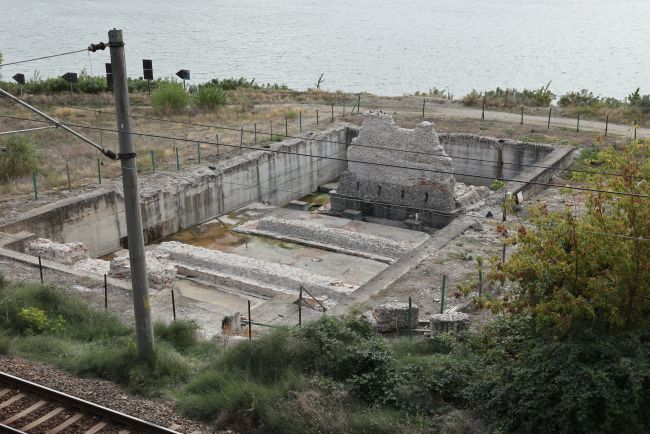
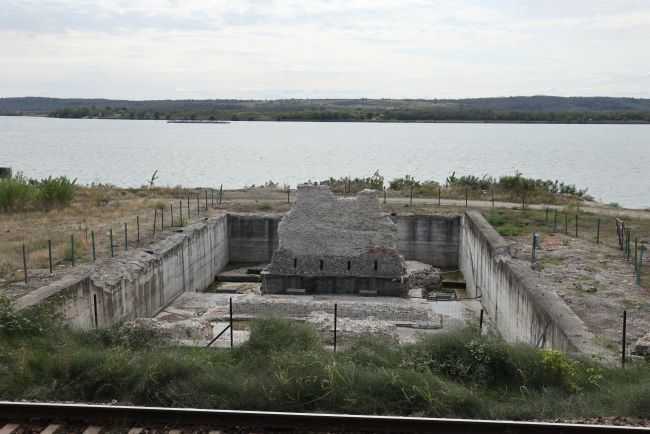
The existence of the bridge was confirmed and localized by the discovery of the pillars on both banks and the remains of the pillars in the water. A picture of the bridge can also be found on the Trajan's Column in Rome. It was therefore a wooden half-timbered structure resting on stone pillars with unusually flat segmental arches, most comparable to the Moselle Bridge in Trier. href="https://de.wikipedia.org/wiki/Trier">Trier.
The remains of the original 20 bridge piers have survived underwater to this day. However, repeated archaeological investigations over the past seventy years have shown that the historic structure is continually deteriorating: While sixteen piers were discovered in 1932, there were twelve in 1982, and only seven in 2003.