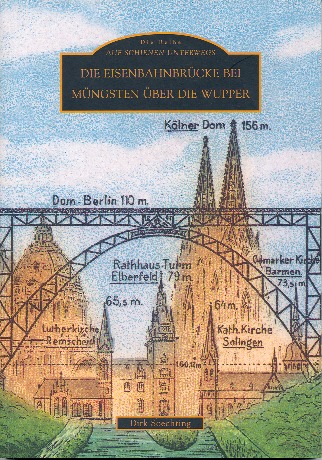
Die Eisenbahnbrücke bei Müngsten über die Wupper ( The railway bridge at Müngsten over the Wupper)
17,90 €
inkl. 7.00% MwSt.(netto: 16,73 €)
Physisches ProduktAuf Lager
Produktdetails
- SKU:
- 3897028921
- Typ:
- Physisches Produkt
- Lager:
- 5 verfügbar
Beschreibung
Collection of historical photos from the construction of the bridge, paperback.
Blurb:
The highest railway bridge in Germany connects the important industrial cities of Solingen and Remscheid 107 meters above the Wupper. The bridge was built between 1894 and 1897 and was called Kaiser Wilhelm Bridge until 1919. The technical marvel, which, like the Wuppertal suspension railway, was groundbreaking for technical development, continues to fascinate the many thousands of visitors who come to the Wupper Valley each year to admire the steel construction with its unique large arch.
Dirk Soechting was director of the Bergisches Museum at Schloss Burg an der Wupper for more than 25 years. the 100th anniversary of the railway bridge near Müngsten in 1997, he honored with a sensational exhibition at Castle Burg. Now he documents the construction and the history of this technical masterpiece in the Bergisch Land on the basis of over 150 previously mostly unpublished photos, postcards, artistic representations and construction drawings.